Phosphatidylserine Cortisol Solution Reviews: Stress doesn’t always stay in your head. A demanding schedule can affect sleep, energy, concentration, exercise recovery, and how you feel throughout the day. That is why products positioned around cortisol and stress support continue to attract attention. Phosphatidylserine Cortisol Solution sits within this category, combining the growing interest in phosphatidylserine with the broader conversation around healthy cortisol regulation.
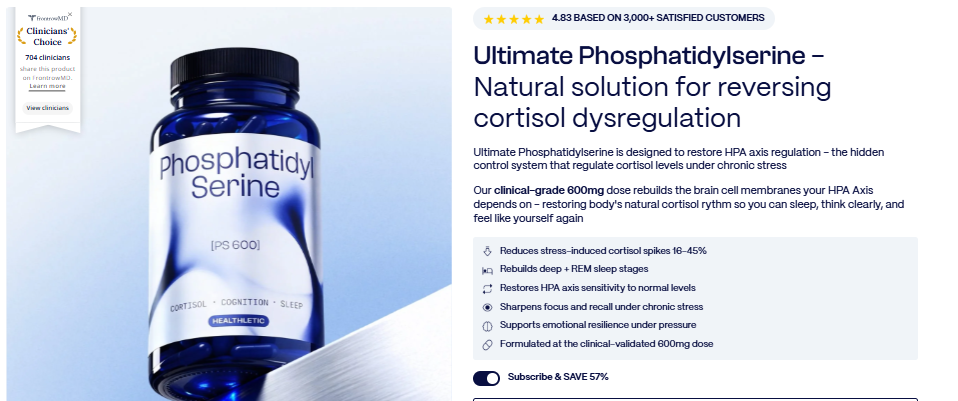
What Is Phosphatidylserine?
Phosphatidylserine, often abbreviated as PS, is a naturally occurring phospholipid found in cell membranes. It is particularly concentrated in tissues such as the brain, which has made phosphatidylserine an area of interest in nutrition and cognitive-health research.
Supplement formulations containing phosphatidylserine are commonly marketed around areas such as:
- Cognitive wellness
- Memory support
- Mental performance
- Exercise recovery
- Stress-response support
The evidence varies depending on the specific outcome, dose, population, and study design. Therefore, it is better to view phosphatidylserine as a nutritional ingredient with an area of ongoing research rather than a guaranteed solution for stress or cortisol problems.
What Is Cortisol?
Cortisol is a hormone produced by the adrenal glands. People sometimes call cortisol the “stress hormone,” but that description is incomplete. Your body needs cortisol.
It contributes to several normal processes, including:
- Supporting metabolism
- Helping regulate blood pressure
- Influencing immune activity
- Helping the body respond to physical and psychological stress
- Supporting normal daily hormonal rhythms
Cortisol levels naturally change throughout the day.
Typically, levels are higher earlier in the day and decline as the day progresses.
Therefore, a single cortisol measurement doesn’t necessarily tell the complete story.
Why Do People Talk About “High Cortisol”?
The phrase “high cortisol” has become extremely common in wellness marketing. However, feeling stressed does not automatically mean that you have a medically abnormal cortisol level. Stress, poor sleep, illness, intense exercise, certain medications, and other factors can influence cortisol. Likewise, symptoms such as fatigue, difficulty sleeping, weight changes, or feeling anxious can have many possible causes. That’s why diagnosing a cortisol disorder requires appropriate clinical evaluation rather than simply matching symptoms to an online checklist.
How Could Phosphatidylserine Relate to Cortisol?
Phosphatidylserine has attracted research interest because of its potential relationship with the body’s response to stress. Some studies have examined phosphatidylserine, alone or in combination with related phospholipids, in situations involving psychological or physical stress. Research has also explored whether supplementation may influence cortisol responses under certain conditions. However, results have not established phosphatidylserine as a universal cortisol-lowering solution.
Context matters.
A response observed during intense exercise, for example, cannot automatically be translated into a claim that a supplement treats chronically elevated cortisol in everyday life.

Phosphatidylserine and Exercise Stress
This is one of the more interesting areas of phosphatidylserine research. Intense exercise creates physiological stress. Researchers have therefore investigated whether phosphatidylserine supplementation may influence hormonal responses associated with strenuous activity. Some studies have reported changes in cortisol or perceived stress under particular conditions, while other research has produced less conclusive findings. Consequently, athletes and active adults may encounter phosphatidylserine in sports-nutrition products. But that does not mean every phosphatidylserine supplement will produce the same result.
Can Phosphatidylserine Support Mental Performance?
Phosphatidylserine is also associated with cognitive wellness. Researchers have investigated its potential relationship with:
- Memory
- Attention
- Cognitive performance
- Mental stress
- Age-related cognitive changes
However, evidence varies by population and outcome. A supplement should therefore be considered supportive nutrition, not a guaranteed cognitive enhancer. If you experience persistent memory or concentration problems, professional evaluation is more appropriate than relying solely on supplementation.
What Does a Cortisol-Support Product Actually Do?
A responsible cortisol-support product should not promise to eliminate cortisol. Instead, the concept should focus on helping support a balanced stress response. This distinction matters because cortisol has useful physiological functions. Trying to suppress cortisol indiscriminately would not be a sensible goal. The body needs appropriate cortisol levels at appropriate times.
The Importance of the Product Formula
If you’re considering a product called Phosphatidylserine Cortisol Solution, start with the Supplement Facts panel.
Don’t rely solely on the product name.
Check:
- Phosphatidylserine amount per serving
- Additional active ingredients
- Serving size
- Recommended daily use
- Other ingredients
- Allergen information
- Manufacturer details
- Warnings and precautions
Some products combine phosphatidylserine with other nutrients or botanical ingredients. That means two products with similar names may not provide the same formulation.
How Much Phosphatidylserine Should You Take?
There isn’t one universal dose that applies to everyone or every purpose. Research has used different amounts depending on the study and intended outcome. Therefore, avoid assuming that a higher dose will produce a better result.
Instead:
- Check the current product label.
- Follow the recommended serving.
- Consider your other supplements.
- Discuss use with a healthcare professional if you take medication or have a medical condition.
Can It Lower Cortisol?
This question deserves a careful answer. Phosphatidylserine has been studied for its potential effects on cortisol responses, particularly during stress or exercise, but that does not establish it as a guaranteed treatment for chronically elevated cortisol. Cortisol regulation is complex. It involves the hypothalamic-pituitary-adrenal axis, daily rhythms, stress exposure, sleep, illness, medication, and other physiological factors. So if you suspect you have a genuine cortisol disorder, testing and professional assessment are more appropriate than relying on a supplement.
Who Might Consider Phosphatidylserine?
A phosphatidylserine-based supplement may appeal to adults interested in:
- Stress-response support
- Cognitive wellness
- Mental performance
- Exercise recovery
- General nutritional support
However, the appropriate choice depends on the actual formula and your personal circumstances.
Who Should Be Careful?
Talk with a healthcare professional before using a phosphatidylserine or cortisol-focused supplement if you:
- Take prescription medication
- Have an endocrine or adrenal condition
- Are pregnant or breastfeeding
- Have a diagnosed medical condition
- Take multiple supplements
- Are undergoing testing for unexplained hormonal symptoms
If you have been told that your cortisol is abnormal, follow your clinician’s recommendations rather than attempting to correct the result independently.

What Results Should You Expect?
Think in terms of support rather than transformation. A supplement may fit into a broader routine, but it cannot guarantee a particular cortisol reading, stress response, sleep improvement, or cognitive outcome. Individual responses vary. More importantly, your cortisol naturally changes throughout the day, so “lower” isn’t automatically better. The goal is healthy regulation, not simply reducing a number.
Final Thoughts
Phosphatidylserine Cortisol Solution Reviews represents an interesting intersection between nutritional supplementation, stress physiology, cognitive wellness, and exercise recovery. Phosphatidylserine has attracted scientific interest, particularly around stress-related hormonal responses and cognitive health. However, the evidence does not justify treating it as a universal solution for high cortisol.